
TOM · The Owner's Manual · Old Testament

2 Chronicles 1

Before you read 2 Chronicles: who, when, why

BOOK 14 OF 66 · OLD TESTAMENT · HISTORY

The Director's Cut, Part Two

AUTHOR
The book does not name its author. Jewish tradition in the Talmud says Ezra wrote Chronicles, at least its family lists. Many scholars think a priest or Levite in Jerusalem, often called the Chronicler, wrote it after the exile from older records the book names, like the records of Nathan, Ahijah and Iddo, 9:29.
EVENTS TOOK PLACE
From Solomon becoming king, about 970 BC, to the fall of Jerusalem in 586 BC, and then a jump to Cyrus sending the Jews home, 538 BC.
DATE
About 450 BC if Ezra wrote it, as tradition says. Many scholars say about 400 to 250 BC.
WRITTEN TO
The Jews back home after the exile, rebuilding the temple and wondering if God would still answer when they prayed.
KEY VERSE
2 Chronicles 7:14. If My people who are called by My name humble themselves and pray and seek My face and turn from their wicked ways, then I will hear from heaven, forgive their sin, and heal their land.
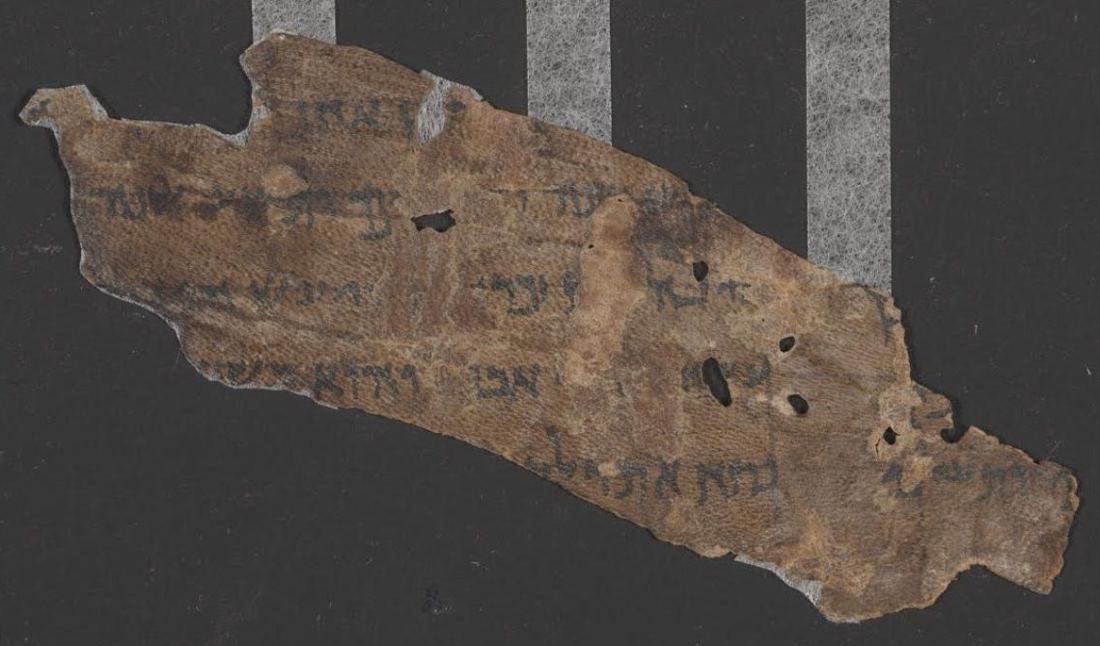
THE OLDEST COPY OF 2 CHRONICLES, MAYBE

The Oldest Copy of 2 Chronicles, Maybe

This piece of leather is 4Q118, found in Cave 4 at Qumran and copied about 50 to 25 BC. Its second column has a few words of 2 Chronicles 28:27 to 29:3. Scholars are not sure it is a copy of Chronicles, because its first column matches no known text. It may be another book that used Chronicles. The white strips are modern mounting tissue. You may hear the scrolls hold every book but Esther. That counts 1 and 2 Chronicles as one book, as the Hebrew Bible does, and this piece is the only one for both. The oldest whole copies are Greek: Codex Vaticanus, 300s AD, and Codex Alexandrinus, 400s AD. The oldest Hebrew copy is the Aleppo Codex, about 930 AD, but its pages for 26:19 to 35:7 were lost in 1947. The oldest complete Hebrew copy is the Leningrad Codex, 1008 AD. Photo Shai Halevi, Leon Levy Dead Sea Scrolls Digital Library, Israel Antiquities Authority.

The Setting

Almost all of it happens in Jerusalem and the towns of Judah, the southern kingdom. The northern kingdom, Israel, only shows up when it fights or makes deals with Judah. Battles happen at Mareshah, the Wilderness of Tekoa and Megiddo.

What Was Going Wrong

  • Child Sacrifice. King Ahaz burned his sons in the fire in the Valley of Ben hinnom (28:3), and King Manasseh did the same (33:6).
  • Idols in the Temple. Ahaz shut the temple doors (28:24). Manasseh set up altars to the stars and a carved idol inside the temple itself (33:4 to 7).
  • Good Kings Who Finished Badly. Asa jailed a prophet (16:10), Joash had a prophet stoned (24:21), Amaziah bowed to Edom's gods (25:14), and Uzziah's pride ended in leprosy (26:16 to 21).
  • They Mocked the Prophets. God kept sending messengers because He had compassion on His people, but they mocked them until there was no remedy (36:15 to 16).

Where to Find Jesus

  • 2 Chronicles 3:1. The temple stood on Mount Moriah, where God provided a ram in Isaac's place, Genesis 22. Many see Jesus, the Lamb of God, John 1:29.
  • 2 Chronicles 6:18. Solomon asked, Will God really live on earth with men? John 1:14 answers: the Word became flesh and dwelt among us.
  • 2 Chronicles 22:10 to 12. Athaliah tried to wipe out David's line, but baby Joash was saved, and the line went on to Jesus.

Cool Stuff Most People Miss

  • One Book, the Last Words. In the Hebrew Bible, 1 and 2 Chronicles are one book, so this is its second half. It comes last in most printed Hebrew Bibles, so its last words, Cyrus telling God's people to go up, are the last words of the Hebrew Bible. Ezra 1:1 to 3 picks up the same words.
  • Only Three Like David. After Solomon, Judah had 19 kings and one queen. In this book only three kings are said to walk in David's ways: Jehoshaphat, 17:3, Hezekiah, 29:2, and Josiah, 34:2. In Kings the three are Asa, Hezekiah and Josiah.
  • The Director'S Cut, Part Two. It skips most of the northern kingdom and Solomon's 700 wives, and adds Manasseh's repentance, Elijah's letter and Hezekiah's great Passover.

How Did It Turn Out?

Babylon burned the temple in 586 BC, and the land rested until seventy years were complete, 36:19 to 21. Then Cyrus said, Go up. The story goes on in Ezra.

Chapter 1 in 30 seconds

Solomon goes to Gibeon and offers a thousand burnt offerings. That night God says, Ask for whatever you want. Solomon asks for wisdom to lead God's people, and God throws in riches and honor too. Soon silver is as common as stones in Jerusalem, and horses are rolling in from Egypt.

Tap a color to hide it

Solomon’s Prayer for Wisdom// 1 Kings 3:1–15; Psalm 45:1–17; Psalm 72:1–20

1Now Solomon son of David established himself securely over his kingdom, and Yahweh his God was with him and highly exalted him.

2Then Solomon spoke to all Israel, to the commanders of thousands and of hundreds, to the judges, and to every leader in all Israel—the heads of the families. 3And Solomon and the whole assembly went to the high place at Gibeon because it was the location of God’s Tent of Meeting, which Moses the servant of Yahweh had made in the wilderness.

  • 2CH 1:3[NOTE]GIBEON. The old tabernacle Moses made in the wilderness still stood at Gibeon, but the ark was in Jerusalem, 1:4.

4Now David had brought the ark of God from Kiriath-jearim to the place he had prepared for it, because he had pitched a tent for it in Jerusalem. 5But the bronze altar made by Bezalel son of Uri, the son of Hur, was in Gibeon before the tabernacle of Yahweh. So Solomon and the assembly inquired of Him there.

6Solomon offered sacrifices there before Yahweh on the bronze altar at the Tent of Meeting, where he offered a thousand burnt offerings.

7That night God appeared to Solomon and said, “Ask, and I will give it to you!”

8Solomon replied to God: “You have shown much loving devotion to my father David, and You have made me king in his place. 9Now, O Yahweh God, let Your promise to my father David be fulfilled. For You have made me king over a people as numerous as the dust of the earth. 10Now grant me wisdom and knowledge, so that I may lead this people. For who is able to govern this great people of Yours?”

11God said to Solomon, “Since this was in your heart instead of requesting riches or wealth or honor for yourself or death for your enemies—and since you have not even requested long life but have asked for wisdom and knowledge to govern My people over whom I have made you king— 12therefore wisdom and knowledge have been granted to you. And I will also give you riches and wealth and honor unlike anything given to the kings before you or after you.”

13So Solomon went to Jerusalem from the high place in Gibeon, from before the Tent of Meeting, and he reigned over Israel.

Solomon’s Riches// 1 Kings 10:26–29

14Solomon accumulated 1,400 chariots and 12,000 horses, which he stationed in the chariot cities and also with him in Jerusalem. 15The king made silver and gold as common in Jerusalem as stones, and cedar as abundant as sycamore in the foothills.

16Solomon’s horses were imported from Egypt and Kue; the royal merchants purchased them from Kue. 17A chariot could be imported from Egypt for 15 pounds of silver, and a horse for 3¾ pounds. Likewise, they exported them to all the kings of the Hittites and to the kings of Aram.

See the whole Bible light up in color.

Nate's Highlighting Guide lists every prophecy, fulfillment, miracle and bloodline name in one place, so you can mark your own Bible with the same 15 colors.

Get the Free Highlighting Guide Free. No spam. Unsubscribe anytime.

Troubleshooting

Frequently asked questions

What is TOM?

TOM is The Owner's Manual, a free translation built on the Berean Standard Bible. It uses modern measurements, prints Yahweh where the Hebrew has God's name, and puts words missing from the earliest manuscripts in [square brackets]. Every change is listed in How It Was Translated.

What do the colors mean?

Each color marks one kind of verse: lime green for prophecies about the Messiah, teal for miracles, sand for archaeology, and so on. Tap any color in the chapter key to turn it off. Use Customize to choose exactly which ones you see.

Can I read without highlights?

Yes. Turn off the Highlights switch at the top for plain text. Your choice is remembered on this device.

Do the other translations have the colors too?

Yes. The colors, red letters, bloodline names and study notes come from TOM and are matched to every other translation verse by verse, so you can read the KJV, NIV or any other translation here with the same study helps.

Is this free?

Yes. The whole Bible is free to read online. The printed Owner's Manual Study Bible is coming soon.