
TOM · The Owner's Manual · Old Testament

Ezra 1

Before you read Ezra: who, when, why

BOOK 15 OF 66 · OLD TESTAMENT · HISTORY

Back From Babylon

AUTHOR
The book does not name its author. Jewish tradition in the Talmud says Ezra wrote it. Ezra tells part of the story himself, I and me, 7:27 to 9:15. Many scholars think the same writer who gave us Chronicles, or a later editor, put Ezra's own memoir together with older records and letters.
EVENTS TOOK PLACE
From Cyrus sending the Jews home, 538 BC, to the temple finished, 515 BC, and then Ezra's trip in 458 BC. Chapter 4 also jumps ahead to about 450 BC.
DATE
About 440 to 400 BC, soon after Ezra's time. Some scholars say later.
WRITTEN TO
The Jews back in Judah, a small group under Persian rule, wondering if God was still with them.
KEY VERSE
Ezra 7:10. For Ezra had set his heart to study the Law of Yahweh, to practice it, and to teach its statutes and ordinances in Israel.
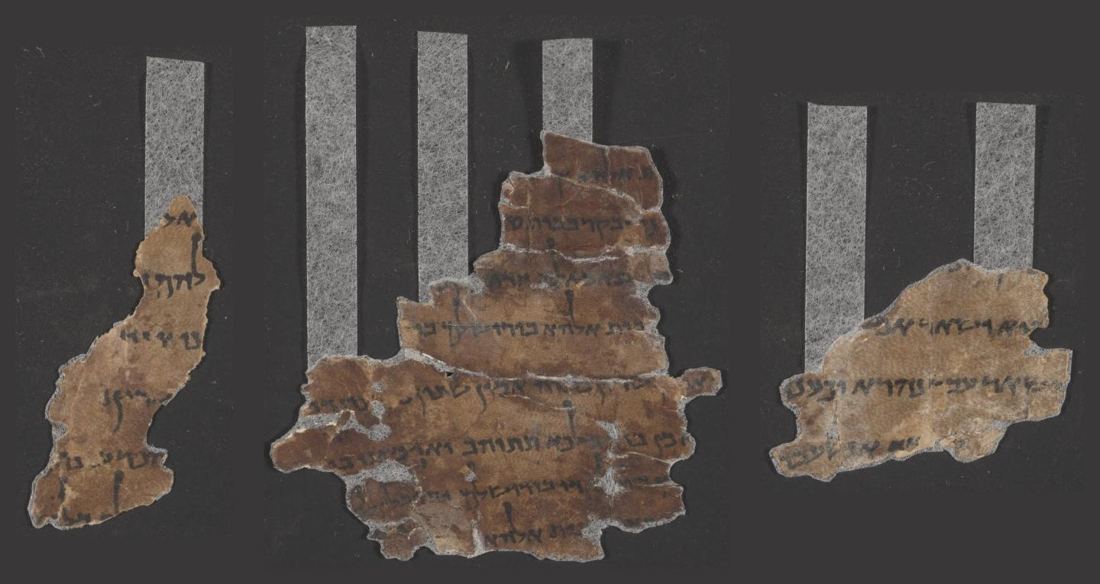
THE OLDEST COPY OF EZRA

The Oldest Copy of Ezra

These three small pieces of leather are 4Q117, called 4QEzra, found in Cave 4 at Qumran and copied about 50 to 25 BC. They hold parts of Ezra 4:2 to 6, 4:9 to 11 and 5:17 to 6:5. The biggest piece, in the middle, is in Aramaic. The white strips are modern mounting tissue. It is the only Dead Sea Scroll of Ezra. You may hear the scrolls hold every book but Esther. That counts Ezra and Nehemiah as one book, as the Hebrew Bible does. No piece of Nehemiah from Qumran has been confirmed. The oldest whole copies are Greek, like Codex Vaticanus, 300s AD. The Aleppo Codex, about 930 AD, lost its pages for Ezra in 1947, so the oldest complete Hebrew copy is the Leningrad Codex, 1008 AD. Photo Shai Halevi, Leon Levy Dead Sea Scrolls Digital Library, Israel Antiquities Authority.

The Setting

It starts in Babylon, under the Persian empire, and moves to Jerusalem and the towns of Judah. Letters fly back and forth to the Persian kings, and a lost scroll turns up at Ecbatana in Media. Ezra's group camps by the Ahava Canal before the long walk home.

What Was Going Wrong

  • Enemies. The people of the land tried to scare the builders, hired advisers against them and wrote letters to the king (4:4 to 6).
  • The Work Stopped. A king's order stopped the building, and the house of God sat unfinished for years (4:24).
  • Mixing With Other Gods. Many men, even priests and leaders, married women from nations whose worship God had forbidden (9:1 to 2).

Where to Find Jesus

  • Ezra 3:2. Zerubbabel, who led the rebuilding, was a grandson of King Jehoiachin. He is in Jesus' family line, Matthew 1:12 to 13 and Luke 3:27. God kept David's line alive through the exile.
  • Ezra 6:15. This is the second temple. Herod later made it bigger, and Jesus taught in it. Haggai 2:9 promised its glory would be greater than the first.
  • Ezra 9:6. Ezra had done nothing wrong, but he prayed our sins, not their sins, and stood with his people before God. Christians see a picture of Jesus, who carried His people's sins.

Cool Stuff Most People Miss

  • Part of It Is in Aramaic. Ezra 4:8 to 6:18 and 7:12 to 26 are written in Aramaic, not Hebrew. That was the language of the Persian empire's letters, and later the everyday language Jesus spoke.
  • One Book With Nehemiah. The Hebrew Bible counted Ezra and Nehemiah as one book. Christians split them early on, and Hebrew Bibles were printed as two books from the 1500s.
  • Real Kings. Cyrus, Darius, Xerxes and Artaxerxes are all named on their own monuments, and even the governor Tattenai shows up on a clay tablet. See the Field Notes pages.

How Did It Turn Out?

The temple was finished in 515 BC, and Ezra brought God's law back to the center of the people's life. About 13 years later Nehemiah came to rebuild Jerusalem's walls. The story goes on in Nehemiah.

Chapter 1 in 30 seconds

Cyrus king of Persia makes an announcement: Any of God's people who want to go home to Jerusalem and rebuild His house, go. The neighbors chip in silver, gold and animals. Cyrus even hands back the temple's gold and silver dishes and bowls that Nebuchadnezzar stole, 5,400 in all, and Sheshbazzar carries them home.

Tap a color to hide it

The Proclamation of Cyrus// 2 Chronicles 36:22–23; Isaiah 45:1–25

1In the first year of Cyrus king of Persia, to fulfill the word of Yahweh spoken through Jeremiah, Yahweh stirred the spirit of Cyrus king of Persia to send a proclamation throughout his kingdom and to put it in writing as follows:

  • EZR 1:1[FULFILLS]Even in exile God would not reject Israel but remember His covenant and 9 more ← LEV 26:44-45; DT 30:1-5; IS 41:25; IS 44:28; IS 46:11; JER 16:14-15; JER 25:11-12; JER 29:10; LAM 4:22; MIC 4:10
  • EZR 1:1[ARCHAEOLOGY]Records Cyrus's policy of returning exiled peoples and rebuilding temples
  • EZR 1:1[NOTE]THE SAME WORDS. 1:1 to 3 repeats the last words of 2 Chronicles, 36:22 to 23, so the story picks up right where Chronicles ended. Jeremiah had said the exile would last seventy years, Jeremiah 25:11 to 12 and 29:10. See the Big Question pages Why End With Cyrus? and Seventy Years of Rest in 2 Chronicles.
  • EZR 1:1[FIELD NOTES]Cyrus's own clay cylinder says he sent captured peoples home. See The Cyrus Cylinder Field Notes page in 2 Chronicles.

2“This is what Cyrus king of Persia says:

‘Yahweh, the God of heaven, who has given me all the kingdoms of the earth, has appointed me to build a house for Him at Jerusalem in Judah.

  • EZR 1:2[NOTE]CYRUS'S DECREE. Cyrus says Yahweh gave him the kingdoms of the earth. That is the king's own decree, not God's words, so it stays black, like 2 Chronicles 36:23. Isaiah had named Cyrus long before, Isaiah 44:28 and 45:1.

3Whoever among you belongs to His people, may his God be with him, and may he go to Jerusalem in Judah and build the house of Yahweh, the God of Israel; He is the God who is in Jerusalem. 4And let every survivor, wherever he lives, be assisted by the men of that region with silver, gold, goods, and livestock, along with a freewill offering for the house of God in Jerusalem.’”

  • EZR 1:3[FORESHADOW]Cyrus let the Jews go home to rebuild, a pattern of return after exile → Many Christians see this in the Jewish return to the land in 1948; others read it differently.MEDIUM
  • EZR 1:3[FULFILLS]God's people would go out from Babylon ← IS 48:20

5So the family heads of Judah and Benjamin, along with the priests and Levites—everyone whose spirit God had stirred—prepared to go up and rebuild the house of Yahweh in Jerusalem.

6And all their neighbors supported them with articles of silver and gold, with goods and livestock, and with valuables, in addition to all their freewill offerings.

Cyrus Restores the Holy Vessels

7King Cyrus also brought out the articles belonging to the house of Yahweh that Nebuchadnezzar had carried away from Jerusalem and placed in the temple of his gods. 8Cyrus king of Persia had them brought out by the hand of Mithredath the treasurer, who counted them out to Sheshbazzar the prince of Judah. 9This was the inventory:

  • EZR 1:7[FULFILLS]The temple articles would be carried to Babylon and later brought back ← JER 27:21-22
  • EZR 1:8[NOTE]SHESHBAZZAR. The prince of Judah who carried the temple bowls home. See the Big Question pages Sheshbazzar and Zerubbabel.

30 gold dishes,

1,000 silver dishes,

29 silver utensils,

1030 gold bowls,

410 matching silver bowls,

and 1,000 other articles.

11In all, there were 5,400 gold and silver articles. Sheshbazzar brought all these along when the exiles went up from Babylon to Jerusalem.

See the whole Bible light up in color.

Nate's Highlighting Guide lists every prophecy, fulfillment, miracle and bloodline name in one place, so you can mark your own Bible with the same 15 colors.

Get the Free Highlighting Guide Free. No spam. Unsubscribe anytime.

Troubleshooting

Frequently asked questions

What is TOM?

TOM is The Owner's Manual, a free translation built on the Berean Standard Bible. It uses modern measurements, prints Yahweh where the Hebrew has God's name, and puts words missing from the earliest manuscripts in [square brackets]. Every change is listed in How It Was Translated.

What do the colors mean?

Each color marks one kind of verse: lime green for prophecies about the Messiah, teal for miracles, sand for archaeology, and so on. Tap any color in the chapter key to turn it off. Use Customize to choose exactly which ones you see.

Can I read without highlights?

Yes. Turn off the Highlights switch at the top for plain text. Your choice is remembered on this device.

Do the other translations have the colors too?

Yes. The colors, red letters, bloodline names and study notes come from TOM and are matched to every other translation verse by verse, so you can read the KJV, NIV or any other translation here with the same study helps.

Is this free?

Yes. The whole Bible is free to read online. The printed Owner's Manual Study Bible is coming soon.