
TOM · The Owner's Manual · Old Testament

Nehemiah 1

Before you read Nehemiah: who, when, why

BOOK 16 OF 66 · OLD TESTAMENT · HISTORY

We're Gonna Build a Wall and the Persians Are Gonna Pay For That Wall!

AUTHOR
Nehemiah tells much of the story himself, I and me, 1:1 to 7:5 and parts of chapters 12 and 13. The Talmud says Ezra wrote his book, which then counted Ezra and Nehemiah as one, and that Nehemiah finished the book of Chronicles. Many scholars think the same editor who put Ezra together joined Nehemiah's own memoir to older lists.
EVENTS TOOK PLACE
From Nehemiah's prayer in 446 BC and his trip to Jerusalem in 445 BC to his second visit, after 433 BC.
DATE
About 430 to 400 BC. Some scholars say later, because 12:22 lists high priests down to Jaddua.
WRITTEN TO
The Jews back in Judah, a small group under Persian rule with broken walls and loud enemies.
KEY VERSE
Nehemiah 6:16. When all our enemies heard about this, all the surrounding nations were afraid and disheartened, for they realized that this task had been accomplished by our God.
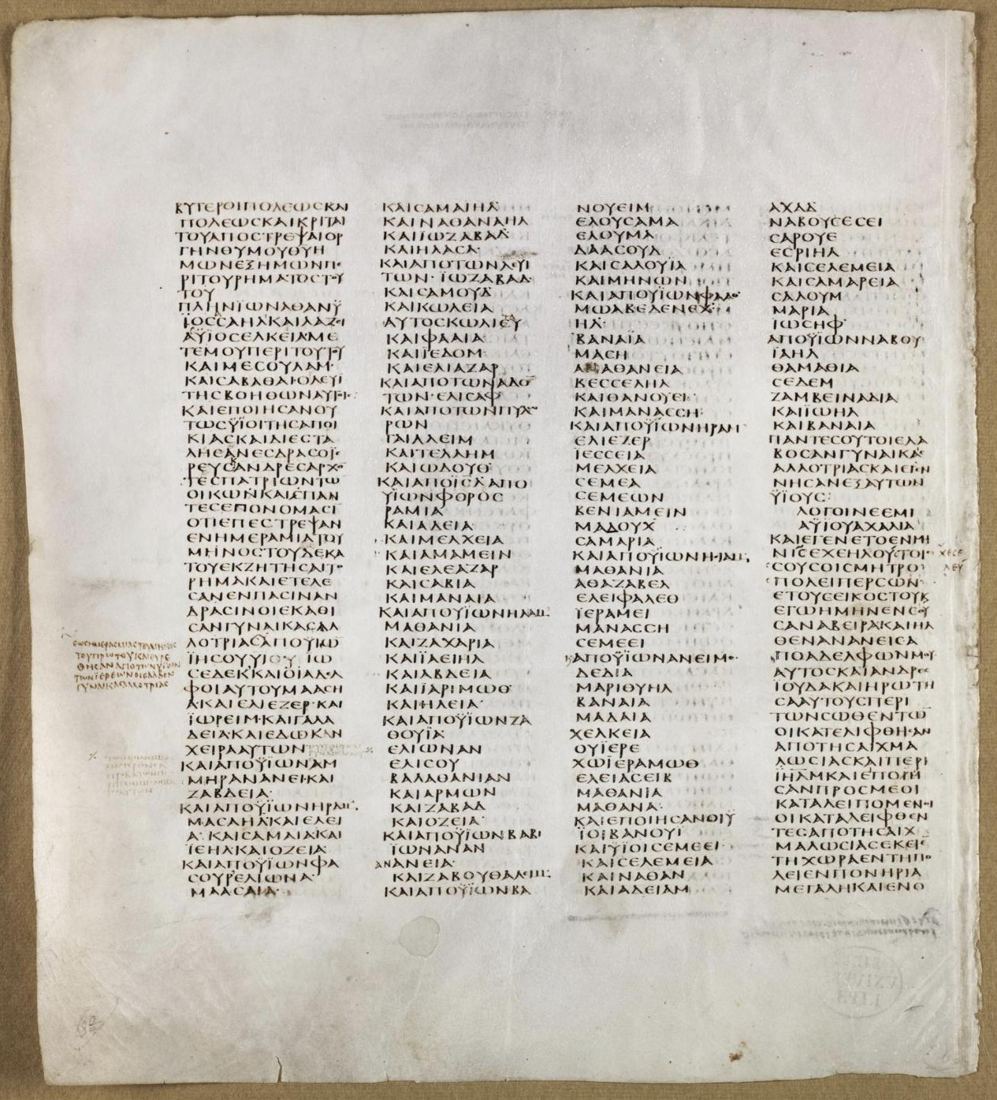
ONE OF THE OLDEST COPIES OF NEHEMIAH

One of the Oldest Copies of Nehemiah

A page of Codex Sinaiticus, copied in Greek about 330 to 360 AD and now in Leipzig, Germany. Greek Bibles count Ezra and Nehemiah as one book, 2 Esdras, so the page ends Ezra's list of names, Ezra 10, and then starts Nehemiah in the last column: The words of Nehemiah son of Hacaliah, 1:1 to 3. You may hear the Dead Sea Scrolls hold every book but Esther. That counts Ezra and Nehemiah as one book, as the Hebrew Bible does. No piece of Nehemiah from Qumran has been confirmed; two small pieces sold after 2000 have no known find spot, and experts think they are likely fakes. The oldest complete Hebrew copy is the Leningrad Codex, 1008 AD. Photo Leipzig University Library, codexsinaiticus.org.

The Setting

It starts in Susa, a Persian royal city in what is now Iran, where Nehemiah serves the king his wine. Then it moves to Jerusalem, a small city in ruins, with enemies on every side: Sanballat in Samaria to the north, Tobiah in Ammon to the east, Geshem in Arabia to the south and the people of Ashdod to the west.

What Was Going Wrong

  • Broken Walls. Jerusalem's walls were torn down and its gates burned, so the people were in great trouble and disgrace (1:3).
  • Enemies. Sanballat, Tobiah and Geshem mocked, threatened, lied and hired a false prophet to stop the work (4:1 to 8, 6:1 to 14).
  • The Rich Robbing the Poor. Rich Jews charged their poor brothers interest and took their fields and their children (5:1 to 5).
  • Slipping Back. While Nehemiah was away, the people let Tobiah live in the temple, stopped paying the Levites, sold on the Sabbath and married women who served other gods (13:4 to 27).

Where to Find Jesus

  • Nehemiah 2:1 to 8. The king's order to rebuild Jerusalem is where many start counting Daniel's seventy weeks to the Messiah, Daniel 9:25. See the Big Question Seventy Weeks and 445 BC.
  • Nehemiah 8:8. The Levites read God's law and explained it so the people understood. After He rose, Jesus explained what all the Scriptures said about Himself, Luke 24:27.
  • Nehemiah 13:8. Nehemiah threw Tobiah's things out of the temple storeroom. Jesus drove the sellers out of the temple courts and said, Stop turning My Father's house into a marketplace, John 2:16.

Cool Stuff Most People Miss

  • 52 Days. The whole wall went up in 52 days, 6:15. Even the enemies admitted God did it, 6:16.
  • One Book With Ezra. The Hebrew Bible counted Ezra and Nehemiah as one book. Greek Bibles call it 2 Esdras. Hebrew Bibles were printed as two books from the 1500s.
  • Real People. Sanballat's sons and Johanan the high priest are named in a letter from 407 BC, and Geshem's son is named on a silver bowl. See the Field Notes pages.

How Did It Turn Out?

The walls stood, Jerusalem filled up again and the people promised to keep God's law, even if they kept slipping. Nehemiah's story is the last history in the Old Testament. The prophet Malachi preached about the same time, and then about 400 years passed before Jesus.

Chapter 1 in 30 seconds

Nehemiah has a great job in the Persian palace. Then his brother brings bad news: Jerusalem's walls are rubble and the people are a joke. Nehemiah sits down and cries for days. Then he prays a big prayer, owns his people's sin, and asks God for favor with the king.

Tap a color to hide it

Nehemiah’s Prayer// Deuteronomy 30:1–10

1These are the words of Nehemiah son of Hacaliah:

In the month of Chislev, in the twentieth year, while I was in the citadel of Susa, 2Hanani, one of my brothers, arrived with men from Judah. So I questioned them about the remnant of the Jews who had survived the exile, and also about Jerusalem.

  • NEH 1:1[NOTE]NEHEMIAH. His name means Yahweh comforts. The month of Chislev in the twentieth year of King Artaxerxes was about December 446 BC. Susa was a Persian royal city in what is now Iran.
  • NEH 1:2[NOTE]HANANI. Nehemiah's brother. Later Nehemiah put him in charge of Jerusalem, 7:2.

3And they told me, “The remnant who survived the exile are there in the province, in great trouble and disgrace. The wall of Jerusalem is broken down, and its gates have been burned with fire.”

4When I heard these words, I sat down and wept. I mourned for days, fasting and praying before the God of heaven.

  • NEH 1:4[NOTABLE]Bad news from home broke his heart. Before he made a plan, he cried, fasted and prayed for days.

5Then I said:

“O Yahweh, God of heaven, the great and awesome God who keeps His covenant of loving devotion with those who love Him and keep His commandments, 6let Your eyes be open and Your ears attentive to hear the prayer that I, Your servant, now pray before You day and night for Your servants, the Israelites.

I confess the sins that we Israelites have committed against You. Both I and my father’s house have sinned. 7We have behaved corruptly against You and have not kept the commandments, statutes, and ordinances that You gave Your servant Moses.

8Remember, I pray, the word that You commanded Your servant Moses when You said, ‘If you are unfaithful, I will scatter you among the nations, 9but if you return to Me and keep and practice My commandments, then even if your exiles have been banished to the farthest horizon, I will gather them from there and bring them to the place I have chosen as a dwelling for My Name.’

  • NEH 1:8[FULFILLS]Even in exile God would not reject Israel but remember His covenant ← LEV 26:44-45
  • NEH 1:8[FULFILLS]Yahweh will gather you again from all the nations where He has scattered you; if any are driven to the farthest parts under heaven, He will bring you back ← DT 30:1-5MEDIUM
  • NEH 1:8[NOTE]QUOTING MOSES. Nehemiah quotes what God told Moses, a blend of Leviticus 26:33 and Deuteronomy 30:1 to 4, so God's words print red. Nehemiah's own prayer stays black.

10They are Your servants and Your people. You redeemed them by Your great power and mighty hand. 11O Lord, may Your ear be attentive to my prayer and to the prayers of Your servants who delight to revere Your name. Give Your servant success this day, I pray, and grant him mercy in the sight of this man.”

(At that time I was the cupbearer to the king.)

  • NEH 1:11[NOTE]CUPBEARER. He served the king's wine and may have tasted it first to check for poison. It was a trusted job, close to the king every day.

See the whole Bible light up in color.

Nate's Highlighting Guide lists every prophecy, fulfillment, miracle and bloodline name in one place, so you can mark your own Bible with the same 15 colors.

Get the Free Highlighting Guide Free. No spam. Unsubscribe anytime.

Troubleshooting

Frequently asked questions

What is TOM?

TOM is The Owner's Manual, a free translation built on the Berean Standard Bible. It uses modern measurements, prints Yahweh where the Hebrew has God's name, and puts words missing from the earliest manuscripts in [square brackets]. Every change is listed in How It Was Translated.

What do the colors mean?

Each color marks one kind of verse: lime green for prophecies about the Messiah, teal for miracles, sand for archaeology, and so on. Tap any color in the chapter key to turn it off. Use Customize to choose exactly which ones you see.

Can I read without highlights?

Yes. Turn off the Highlights switch at the top for plain text. Your choice is remembered on this device.

Do the other translations have the colors too?

Yes. The colors, red letters, bloodline names and study notes come from TOM and are matched to every other translation verse by verse, so you can read the KJV, NIV or any other translation here with the same study helps.

Is this free?

Yes. The whole Bible is free to read online. The printed Owner's Manual Study Bible is coming soon.